If your auto insurance premium went up in 2025—even though you didn’t file a claim—you’re not alone. Across the country and here in North Carolina, drivers experienced noticeable increases, leading many to ask a frustrating but fair question:
“What changed—and what can I actually do about it?”
This article breaks down why auto insurance rates increased in 2025, what factors insurers are watching in 2026, and practical steps you can take this year to protect your budget without sacrificing coverage.
Why Auto Insurance Rates Increased in 2025
Auto insurance pricing is driven by risk and cost. In 2025, both moved sharply in the wrong direction.
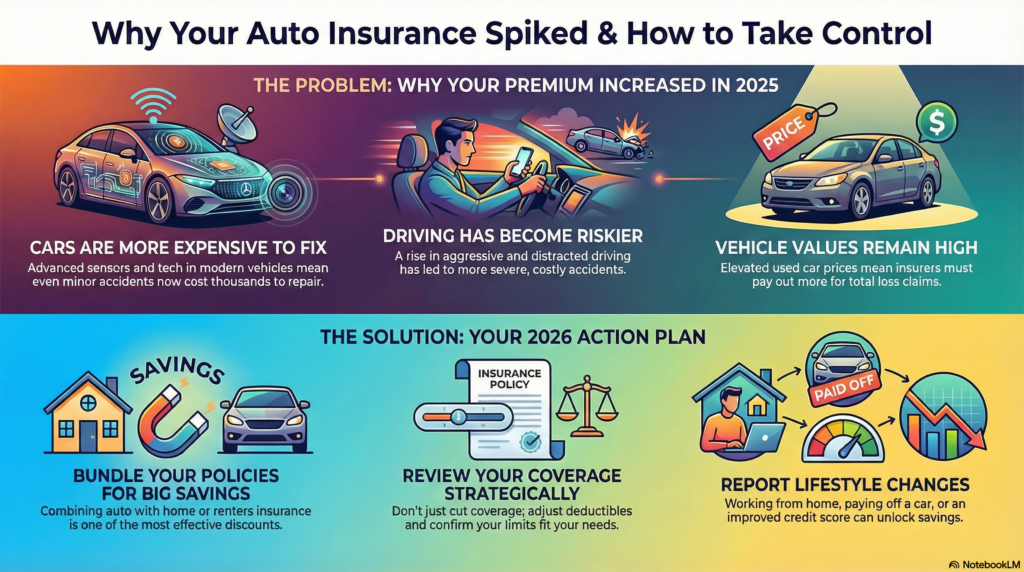
1. Repair Costs Are Significantly Higher
Modern vehicles are more advanced—and more expensive to fix.
Key contributors:
- Advanced driver-assistance systems (ADAS) sensors in bumpers and windshields
- Calibrations required after even minor collisions
- Higher labor rates at body shops
- Supply chain delays increasing part costs
A low-speed accident that once cost $2,000 to repair can now easily exceed $5,000.
Why this matters: When insurers pay more per claim, rates increase across the board.
How Advanced Driver-Assistance Systems Are Increasing Costs
2. More Accidents, More Severe Claims
Post-pandemic driving behavior shifted permanently:
- More aggressive driving
- Higher speeds
- Increased distracted driving
Even when accident frequency stabilizes, claim severity continues to rise—meaning insurers pay out more per incident.
3. Vehicle Values Remain Elevated
Used car prices surged in recent years and, while cooling slightly, remain higher than pre-2020 levels.
This impacts:
- Total loss payouts
- Comprehensive claim costs
- Gap exposure for financed vehicles
Higher vehicle values = higher insurer payouts.
4. State-Level Insurance Pressures
Insurance is regulated at the state level. In North Carolina:
- Rate filings must reflect rising loss costs
- Insurers must maintain adequate reserves
- Multi-year underpricing corrections are occurring
Many carriers absorbed losses for years before adjusting pricing in 2025.
What Insurers Are Focusing on in 2026
Looking ahead, insurers are less concerned with who you are and more focused on how risk is managed.
Key Underwriting Trends for 2026
- Clean driving records matter more than ever
- Prior claims (even small ones) carry more weight
- Coverage structure is under greater scrutiny
- Multi-policy households receive stronger consideration
Price alone is no longer the primary decision factor for carriers—predictability is.
Why “Set It and Forget It” Is Costly
Many drivers renew policies without reviewing:
- Deductibles
- Coverage limits
- Vehicle usage changes
- Eligibility for discounts
In a tightening market, that approach can quietly cost hundreds per year.
What You Can Do in 2026 to Control Costs
You can’t control the global economy—but you can control how your policy is structured.
1. Review Coverage, Not Just Price
Cutting coverage often creates more risk than savings. Instead:
- Adjust deductibles strategically
- Ensure liability limits match your assets
- Confirm optional coverages still make sense
The goal is efficiency, not exposure.
2. Bundle Strategically
Multi-policy discounts remain one of the most effective ways to offset rising auto premiums.
Common bundles:
- Auto + Home
- Auto + Renters
- Auto + Umbrella
Bundling also improves claim handling and underwriting stability.
3. Ask About Usage & Lifestyle Changes
Life changes that can lower rates:
- Reduced commute or remote work
- Paid-off vehicles
- Teen drivers aging out of higher-risk brackets
- Improved credit profile
If your agent doesn’t ask, the savings may never be applied.
4. Drive the Long Game
Safe driving today impacts rates for years—not months.
Focus areas:
- Avoid small claims when possible
- Address tickets promptly
- Consider defensive driving courses if applicable
Insurance pricing is increasingly behavior-based, even without telematics programs.
What Not to Do in 2026
When premiums rise, some reactions cause long-term damage.
Avoid:
- Dropping liability limits to unsafe levels
- Switching carriers every renewal purely on price
- Cancelling coverage gaps—even short ones
- Ignoring coverage reviews altogether
Short-term savings can lead to long-term cost spikes.
Rising Rates Don’t Mean You’re Out of Options
Auto insurance rate increases in 2025 weren’t personal—and they weren’t random. They were driven by higher costs, more severe claims, and delayed market corrections.
The good news? 2026 is about control, not panic.
Drivers who review coverage, bundle intelligently, and plan proactively can still manage costs effectively—without sacrificing protection.
We can help!
If your auto insurance increased in 2025, now is the time to review—not react.
Request a coverage review
Explore bundling options
Confirm you’re properly protected—not just cheapest
A 15-minute conversation can make a meaningful difference.