
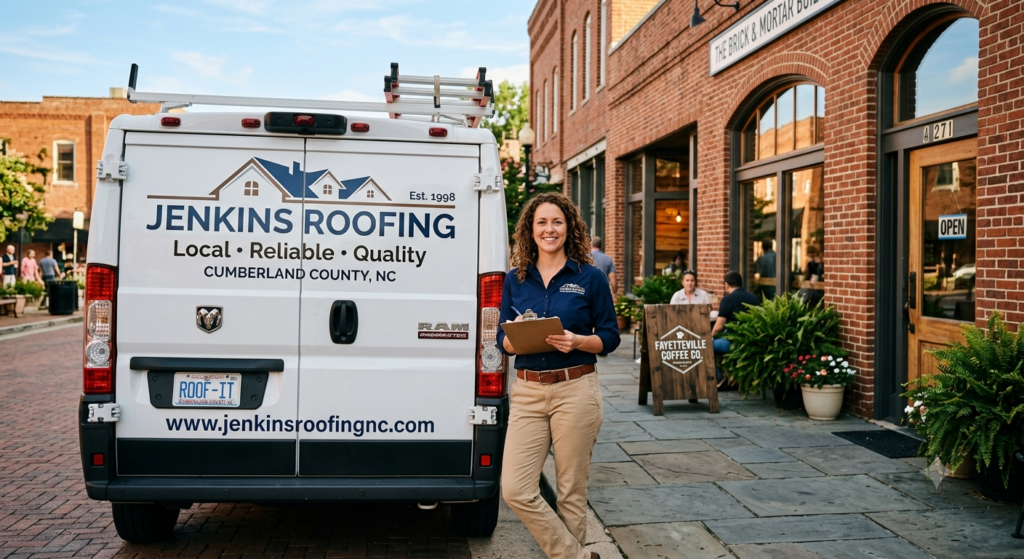
If you run a small business in North Carolina, your personal vehicle is likely the unsung hero of your daily operations. On any given day, you might find yourself driving across Fayetteville to meet a major client, picking up a load of premium lumber or supplies from a vendor in Cumberland County, or dropping off catering boxes for a corporate luncheon in downtown Raleigh. Your car or truck isn’t just a way to commute; it is an active engine driving your livelihood forward.
Because you use the same vehicle to run business errands that you use to drop your kids off at school or head out for a weekend getaway at the coast, it’s completely natural to assume that your standard personal auto policy has you completely covered. After all, you pay your premiums on time, maintain a clean driving record, and have reliable coverage limits.
However, one of the most common and costly misunderstandings local business owners make involves the invisible boundary between personal use and business use. In a tightening insurance market where rates are adjusting across North Carolina, running commercial errands on a personal policy can lead to an unexpected, catastrophic denial of a claim. Understanding your true exposure isn’t about navigating cold corporate rules—it’s about protecting your hard-earned business assets and your family’s financial pipeline. This guide breaks down exactly why your personal policy falls short, how specialized commercial auto insurance NC shields your operations, and the practical steps you can take to stay fully protected on the road.
The Perils of the Personal Auto Policy Exclusion Trap
To understand why a personal auto policy isn’t enough when you’re working, you have to look closely at how insurance carriers define and categorize risk. Personal auto insurance is written with a specific expectation: that the vehicle is primarily being used for commuting to a single workplace, running household errands, and recreational travel. The moment that vehicle is deployed to generate revenue or conduct business business operations, the risk profile transforms entirely in the eyes of an underwriter.
The Danger of the Regular Business Use Clause
Almost every standard personal auto policy written in North Carolina contains explicit exclusions regarding business operations. If you are involved in an accident while driving for work-related tasks, your carrier will look at whether the vehicle was being used for business purposes at that precise moment.
If their investigation reveals that you routinely use your personal vehicle to transport equipment, visit multiple job sites throughout the week, or market your services to clients, they can legally deny the claim under the “regular business use” exclusion. This means your insurance carrier will completely step aside. They will not pay to repair your vehicle, they won’t cover the medical expenses of anyone injured, and they will not fund your legal defense if you are sued.
The Strict Reality of the Delivery Exclusion
The rise of the modern gig economy and localized business models has made delivery services incredibly common, but it has also triggered strict enforcement of the “delivery exclusion.” If your small business involves delivering physical goods—whether you are a florist dropping off arrangements, a baker delivering custom cakes, or a courier moving documents—doing so on a personal policy is an immediate red flag.
Standard personal policies strictly prohibit using a vehicle to carry property for a fee. If an accident occurs while a delivery is active, the claim is almost universally denied instantly. For a growing business, being forced to pay for a third-party’s vehicle damage, property destruction, and medical bills completely out of pocket can trigger a severe cash-flow crisis or lead to bankruptcy.
For national safety statistics and corporate fleet risk management frameworks, explore the National Highway Traffic Safety Administration (NHTSA).
Why Dedicated Commercial Auto Insurance NC Is Critical for Asset Protection
Discovering the gaps in your insurance protection after a wreck has occurred is a deeply painful way to learn about policy structures. Securing a dedicated policy for business driving isn’t just a regulatory checkbox; it is a vital financial shield for your entire business ecosystem.
Higher Liability Limits Built for Business Realities
When a business is pulled into a legal claim following an auto accident, the financial stakes are exponentially higher than they are for a private individual. Plaintiffs’ attorneys know that businesses carry assets, and they will pursue those assets aggressively in court. Standard personal auto policies frequently carry liability limits that can be easily wiped out by a single severe collision involving modern vehicle repair costs and medical treatments.
Specialized commercial auto insurance NC policies are built to offer substantially higher liability limits—often starting at $1,000,000 in combined single limits. This robust level of coverage ensures that if your business vehicle is involved in a major accident, your policy has the financial strength to handle extensive property damage, severe bodily injury claims, and escalating court costs without draining your corporate bank accounts or threatening your operations.
Protecting the Corporate Veil and Your Personal Assets
Many small business owners operate as an LLC or an S-Corporation to create a legal barrier—often called the corporate veil—between their business activities and their personal lives. However, if you are driving your personal vehicle for business tasks and get into an accident under a personal policy that denies the claim, that protective barrier can quickly dissolve.
Because the vehicle is registered in your personal name and your personal policy rejected the claim, you can be sued individually as the driver, while your business is simultaneously sued as the employer. This double exposure means your personal home equity, your family savings accounts, and your future wages are placed directly on the line to settle judgments. Implementing correct commercial auto protection keeps your business liabilities safely isolated from your family’s living room.
Practical Steps to Audit Your Business Driving Risks
You cannot control how other people drive on North Carolina highways, but you can assert absolute control over how your business structures its road risks. Taking a proactive approach to your automotive coverage saves your budget from surprise spikes and protects the community you serve.
Conduct a Vehicle Usage and Ownership Audit
The first step in securing your business on the road is evaluating exactly how every vehicle in your orbit is owned and operated:
- Title Verification: Look at how your business vehicles are titled. If a vehicle is owned by your LLC or corporation, it must be insured under a commercial policy; a personal policy cannot legally cover a vehicle owned by a business entity.
- Usage Mapping: Track what you and your employees are actually doing in those cars. If a vehicle is used to haul heavy tools, carry promotional inventory, or visit multiple clients daily, it’s time to transition that vehicle to a commercial coverage structure.
- Employee Driving Evaluation: Determine if your employees ever use their own personal vehicles to run business errands, such as picking up office supplies or driving to the bank. If they do, your business faces a major blind spot known as non-owned auto risk, which requires specialized endorsement protection.
Implement a Simple Fleet Risk Management Protocol
Once your policies are correctly aligned, create a culture of safety within your business to keep your premiums stable over the long term. Ensure that any employee who drives for business tasks undergoes a routine motor vehicle record (MVR) check to confirm a clean driving history, as insurers look closely at driver predictability in 2026.
Establish clear, written house rules prohibiting distracted driving, mandating seatbelt use, and defining exactly what constitutes an acceptable business trip. Additionally, keep meticulous maintenance logs for all company vehicles; well-documented braking systems, tire tracking, and regular mechanical checkups demonstrate to insurance underwriters that your small business is a safe, reliable partner worth insuring at preferential rates.
Drive Forward with Confidence and Clarity
Building a successful small business in North Carolina takes immense focus, hard work, and a commitment to serving your community safely. With the shifting economic environment and rising costs of vehicle repairs, leaving your daily transportation exposed to a devastating policy exclusion is a gamble your business simply cannot afford to take.
By taking the time to audit your real-world vehicle usage, understanding the limitations of personal policies, and securing dedicated commercial auto insurance NC protection, you place a permanent digital and financial guardrail around everything you’ve built. Proper risk management isn’t about worrying over worst-case scenarios on the road; it’s about establishing an efficient, rock-solid foundation so you can keep driving your business forward with total peace of mind.
Let’s Work Together!
Protecting your business requires an intentional automotive strategy built for the concrete realities of North Carolina roads. If you or your team are currently driving for work tasks on a standard personal policy, or if you aren’t completely certain where your personal coverage ends and business exclusions begin, don’t wait for a highway incident to find out.
Contact us today to schedule a comprehensive, neighborly review of your commercial and auto policies. Let our dedicated team shop multiple top-rated carriers to design a highly efficient, custom safety net tailored specifically to your business vehicle usage, ensuring your pipeline, your employees, and your passion stay fully protected wherever the road takes you.
To check licensing rules, state rate regulations, and automotive filings in our state, visit the North Carolina Department of Insurance (NCDOI).