
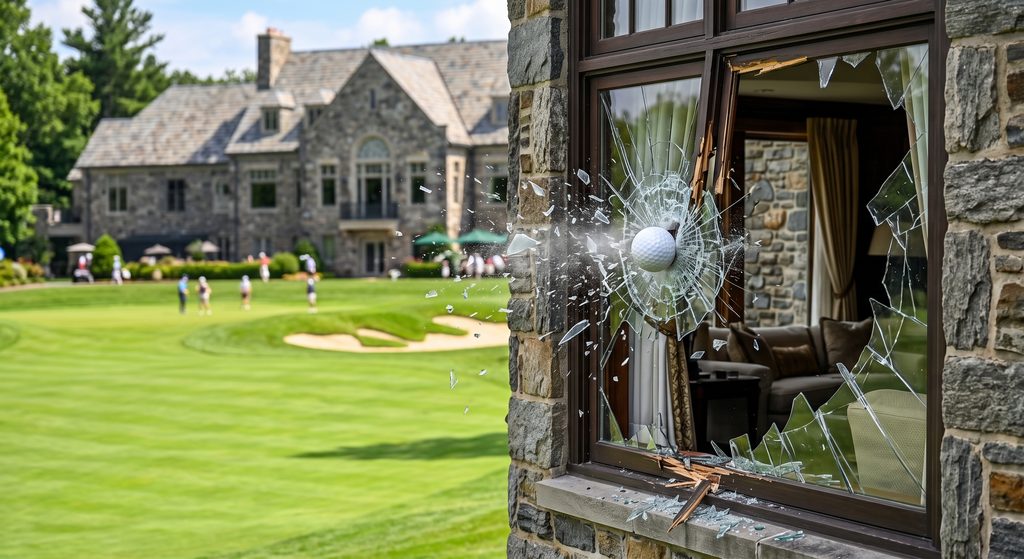
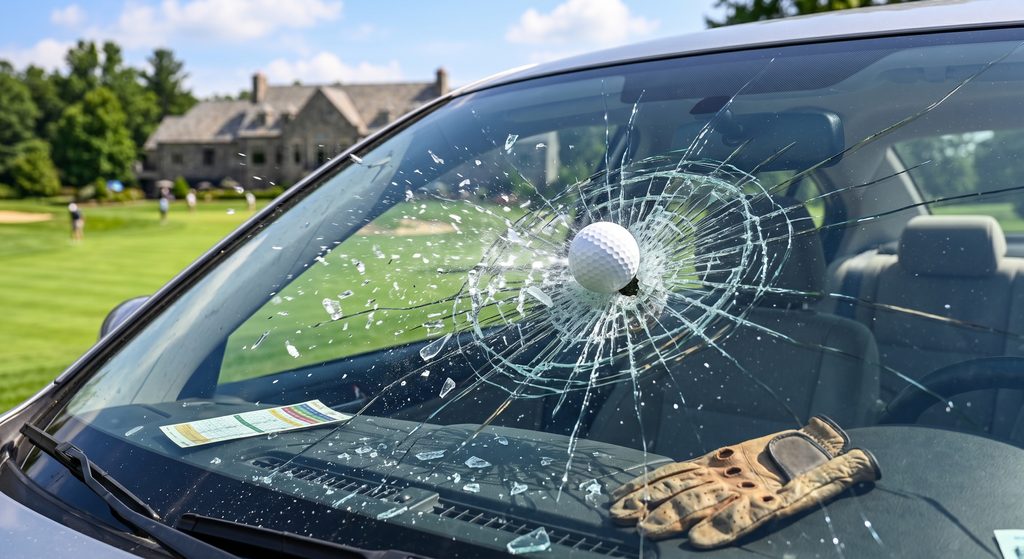
Every golf course operator knows the sound: the sharp crack of a driver followed by the agonizing shatter of a neighboring kitchen window or the denting of a pristine car bumper. Living or driving alongside a lush fairway comes with obvious perks, but when stray shots break through private property, the resulting disputes often land right on the course manager’s desk.
Understanding errant golf ball damage liability isn’t just about preserving neighborly relationships; it’s a fundamental part of protecting your business’s financial health. When a stray ball causes real property or personal damage, determining who holds the checkbook isn’t always straightforward. Legal principles such as the assumption of risk, negligence, and property design liability create a complex web of responsibility between golfers, homeowners, and course managers.
Whether you manage a municipal course or a private country club, having a clear grasp of errant golf ball damage liability helps you resolve disputes smoothly, mitigate legal risks, and structure your commercial insurance policies properly.
1. The Triad of Errant Golf Ball Damage Liability: Golfer, Homeowner, or Course Operator?
To manage risk effectively and keep community relations harmonious, course operators must understand how liability is divided among the three main parties involved in any stray shot scenario.
Understanding the Golfer’s Legal Standing
In most legal jurisdictions, a golfer is generally not liable for accidental errant shots simply because they hit a bad ball. Golf inherently involves unpredictable shots—even the most seasoned players slice, hook, or shank on occasion. Under the doctrine of inherent risk, accidental bad shots are legally considered a natural part of the game.
However, a golfer can be held responsible under errant golf ball damage liability standards if they demonstrate clear negligence or reckless behavior. Key examples include:
- Intentional Misdirection: Intentionally aiming toward houses, parking lots, or non-designated target areas.
- Failure to Exercise Due Care: Hitting a shot without waiting for players, maintenance workers, or homeowners to clear a visible hazard zone.
- Reckless Play: Playing under severe physical impairment or deliberately ignoring basic safety calls (like failing to yell “Fore!” when a shot clearly heads toward someone).
The Homeowner or Property Owner’s Assumed Risk
When someone purchases a home bordering a golf course, courts frequently apply the principle of assumption of risk. By choosing to live adjacent to a fairway, homeowners implicitly accept the known, foreseeable risks associated with the sport—which includes stray balls entering their yard.
- Homeowners Coverage: In typical accidental scenarios, repair costs for broken windows, damaged roof tiles, or dented siding fall under the property owner’s personal homeowners insurance policy.
- Pre-Existing Knowledge: Homeowners who build or buy next to an existing, established hole accept that errant shots are a routine possibility.
The Golf Course Operator’s Financial and Legal Exposure
While course owners aren’t automatically responsible for every single stray shot, they face significant financial exposure under tort law if the layout or operational choices create an unreasonable hazard. Course operators typically face direct errant golf ball damage liability when:
- Design Defects Exist: A hole’s architecture forces errant balls onto neighboring properties (e.g., an extremely tight fairway with a sharp dogleg angled directly toward a residential driveway).
- Management Fails to Mitigate: Course operators receive repeated, documented complaints regarding a specific hazard zone and fail to take reasonable corrective action (such as adjusting tee boxes or putting up safety netting).
- Nuisance Thresholds Are Crossed: The sheer volume of errant balls invading a neighboring property is so severe that it deprives the owner of the reasonable use and enjoyment of their land.
2. Key Legal Doctrines: Negligence vs. Private Nuisance
When property owners pursue legal remedies for damaged property, they generally rely on two primary arguments. Understanding these concepts allows operators to audit their courses before an issue escalates to litigation.
| Legal Concept | Primary Focus | Course Operator Exposure Risk |
| Negligence | Did the operator act reasonably to prevent foreseeable harm? | High—if maintenance changes or lack of safety barriers directly increased risk. |
| Private Nuisance | Does the frequency of errant balls substantially interfere with land use? | High—if a specific property is bombarded by dozens of balls weekly. |
| Assumption of Risk | Did the homeowner knowingly move next to an established course risk? | Protects Course—unless layout changes post-purchase created new hazards. |
Navigating Negligence Claims
To prove negligence, a property owner must demonstrate that the course operator owed a duty of care, breached that duty by failing to maintain or design a safe course, and that this breach directly caused their property damage. For instance, if an operator removes a line of mature trees that previously shielded a home without providing an alternative barrier, they may face heightened liability.
Understanding Nuisance Claims
Even if a course design isn’t strictly “negligent,” a homeowner can win a private nuisance lawsuit if they can prove a continuous pattern of physical invasions. If hundreds of balls hit a single home every month, courts may rule that the course creates an intolerable nuisance, forcing management to alter the hole layout or pay substantial damages.
3. Best Practices for Operators to Manage Errant Golf Ball Damage Liability
Proactive risk management protects your business from costly lawsuits, prevents insurance premium spikes, and fosters great relationships with the surrounding community.
Architectural & Maintenance Modifications
- Re-Align Tee Boxes and Fairways: Adjusting tee angles away from property lines—even by a few degrees—can dramatically redirect the flight paths of average slices.
- Plant Natural Buffers: Dense rows of fast-growing evergreens or strategic tree canopies act as attractive, natural safety barriers that absorb stray shots.
- Install Commercial Safety Netting: High-grade netting in high-risk zones provides clear physical protection and demonstrates that management took active steps to mitigate known hazards.
- Use Strategic Course Signage: Post visible rules and notices on scorecards and near high-risk tee boxes, reminding players of their legal duty to play safely and report accidental property damage.
Establishing a Robust Community & Risk Incident Protocol
- Maintain a Detailed Incident Log: Document every reported property damage claim immediately. Record the date, time, hole location, weather conditions, and photos of the damage. Tracking these details helps identify specific architectural trouble spots before they become major legal issues.
- Conduct Annual Insurance Reviews: Work closely with an experienced commercial insurance team to review your general liability limits, umbrella policies, and property damage endorsements. Ensuring your policy accounts for local property developments keeps your operational protection seamless.
- Maintain Open Neighbor Communications: Establish an open line of communication with neighboring Homeowners Associations (HOAs) and residents. Promptly addressing concerns in a friendly, professional manner prevents minor broken windows from escalating into expensive court battles.
Protecting Your Business and Community
Managing errant golf ball damage liability requires a balanced approach of smart course design, proactive maintenance, and open communication with nearby neighbors. While golfers and homeowners carry their own legal responsibilities, course operators who take clear steps to identify and fix hazard zones protect both their property and their bottom line.
If you’re looking to evaluate your current business policies, explore risk management solutions, or make sure your course is fully protected against property claims, our experienced team is here to support you.
Contact Us Today to schedule a comprehensive review of your commercial insurance coverage and risk strategy!