
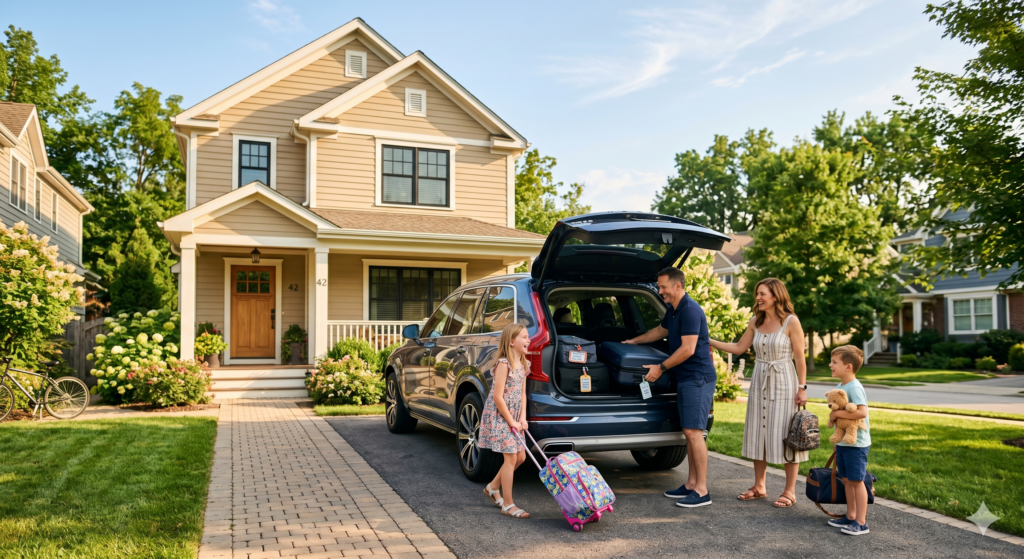
Summer is finally here, and for many of us in the Fayetteville and Fort Bragg area, that means it’s time to pack the bags, load up the car, and head out for some well-deserved rest and relaxation. Whether you’re planning a quick weekend getaway down to Wilmington, a refreshing retreat into the Blue Ridge Mountains, or an extended trip to visit family across the country, there is nothing quite like the excitement of a summer vacation.
But right before you turn the key in the front door lock and pull out of the driveway, a tiny, nagging thought usually sneaks into the back of your mind: Is everything going to be okay while I’m gone?
It’s a completely normal feeling. As neighbors, we watch out for each other’s homes, but as a homeowner, you also want to know that your safety net is securely in place. There are plenty of misconceptions floating around about what homeowners insurance actually does when your house sits empty during summer travel. Some folks assume their standard policy covers absolutely any mishap under the sun, while others worry that stepping foot off their property leaves their personal belongings completely unprotected.
The truth is that home insurance isn’t a “one-size-fits-all” shield, but it is incredibly flexible if you know how it works. Let’s break down exactly what your policy handles, what it ignores, and how you can prep your home for a worry-free vacation this summer.
1. Off-Premises Coverage: Your Belongings on the Road
One of the most pleasant surprises for homeowners is discovering that their personal property coverage doesn’t just stay cooped up inside the house. It actually travels with you.
The Lifesaver of Worldwide Protection
Most standard homeowners policies include what the insurance world calls off-premises coverage. This means your personal belongings—like your clothes, luggage, and even that expensive laptop you brought along to stream movies in the hotel room—are protected against covered risks anywhere in the world. If someone smashes your car window while you’re parked at a scenic mountain overlook and steals your suitcases, it isn’t your auto insurance that steps up to replace those items; it’s your homeowners policy.
The Fine Print on Coverage Limits
While it’s wonderful to have worldwide protection, there is a catch you need to keep in mind. Off-premises coverage is typically capped at a small percentage of your total personal property limit—usually around 10%.
Neighborly Tip: If your policy provides $100,000 for personal property, your belongings away from home are generally only covered up to $10,000. For most vacations, that’s plenty. But if you are traveling with high-value items like luxury watches, high-end camera gear, or fine jewelry, standard limits might leave you short. You may want to look into a temporary policy endorsement or a specialized “rider” to fully protect those valuables before you depart.
2. The Empty House: Theft, Vandalism, and Covered Perils
When a house sits vacant for a week or two, it naturally becomes a more appealing target for burglars. If the worst happens and a break-in occurs while you are away enjoying the beach, a standard homeowners policy is designed to help you pick up the pieces.
Reimbursing Loss and Repairing Damage
If a thief forces entry into your home during your summer travels, your policy’s personal property coverage kicks in to help reimburse you for the stolen items, up to your policy limits. Additionally, the dwelling coverage portion of your insurance will pay to repair the physical damage caused by the break-in, such as a kicked-in rear door, a broken window pane, or damaged door frames.
The 30-Day Vacancy Rule
This is an incredibly critical detail that many homeowners miss: there is a major difference between a home that is temporarily “unoccupied” and one that is legally “vacant.” If you are gone for a standard one-, two-, or even three-week summer vacation, your home is simply unoccupied, and your normal coverage remains fully active.
However, if your summer travels extend past 30 consecutive days—which sometimes happens with extended military assignments or long seasonal trips—many insurance companies strictly limit or entirely completely drop coverage for theft and vandalism. If a property sits empty for too long without anyone checking on it, the risk skyrockets, and insurers expect you to notify them or purchase a specific vacant home policy.
3. The Unseen Summer Threat: Water and Plumbing Mishaps
When we think of summer property damage, we often think of severe thunderstorms or lightning strikes. But the most common, heartbreaking disaster we see happens quietly inside the walls: water damage from a burst pipe or a failed appliance connection.
Sudden and Accidental vs. Gradual Neglect
Insurance is fundamentally built to protect you against things that are sudden and accidental. If a washing machine supply line suddenly snaps on day two of your vacation, sending hundreds of gallons of water through your kitchen and into the crawlspace, that is generally a covered claim. Your policy will help cover the mitigation, drying, and structural repairs.
On the flip side, if a tiny pipe behind your bathroom vanity has been slowly dripping for six months, and the mold and rot finally cause the floor to sag while you’re away, your insurer will likely deny the claim. They view gradual leaks as a matter of home maintenance, which is always the homeowner’s responsibility.
The Power of the Main Water Shut-Off Valve
Even if a major water disaster is technically covered by your policy, dealing with a flooded home is an emotional and logistical nightmare you want to avoid at all costs.
- Locate your main water valve: Before you leave, take two minutes to find the main water shut-off valve for your entire house (usually found in the crawlspace, basement, or near the street curb).
- Give it a turn: Spin it to the off position and open a faucet on the lowest level of the house to drain the remaining pressure.
By cutting off the water supply at the source, you guarantee that even if a pipe breaks while you’re away, it can only leak the tiny amount of water already trapped in the lines, saving you from catastrophic structural damage.
                       SUMMER TRAVEL CHECKLIST

   [ ] Shut off the main water valve to prevent plumbing floods.
   [ ] Unplug major electronics to protect against lightning surges.
   [ ] Lock all windows, sliding doors, and deadbolts securely.
   [ ] Set a timer for interior lights to mimic an active home.
   [ ] Have a trusted neighbor check the mail and watch the property.
Conclusion: Travel with Peace of Mind, Not Assumptions
At the end of the day, summer travel should be about making wonderful memories with the people you love, not tossing and turning in a hotel bed wondering if your home is secure. Your homeowners insurance is an incredibly powerful safety net, but it works best when you understand its boundaries before you ever have to file a claim.
Taking a few proactive, neighborly steps—like turning off your water, securing your high-value items, and knowing your policy limits—ensures that you can truly unplug and enjoy your vacation. When your coverage matches your reality, you get to come home to the exact same peace of mind you left with.
Contact Us Today
Before you finalize your itinerary, let’s make sure your safety net is tightly fastened. Contact us today at The Barge Group for a quick, no-pressure coverage review. We’ll double-check your off-premises limits, clarify your deductibles, and ensure your home is fully protected so you can hit the road with complete confidence this summer!