
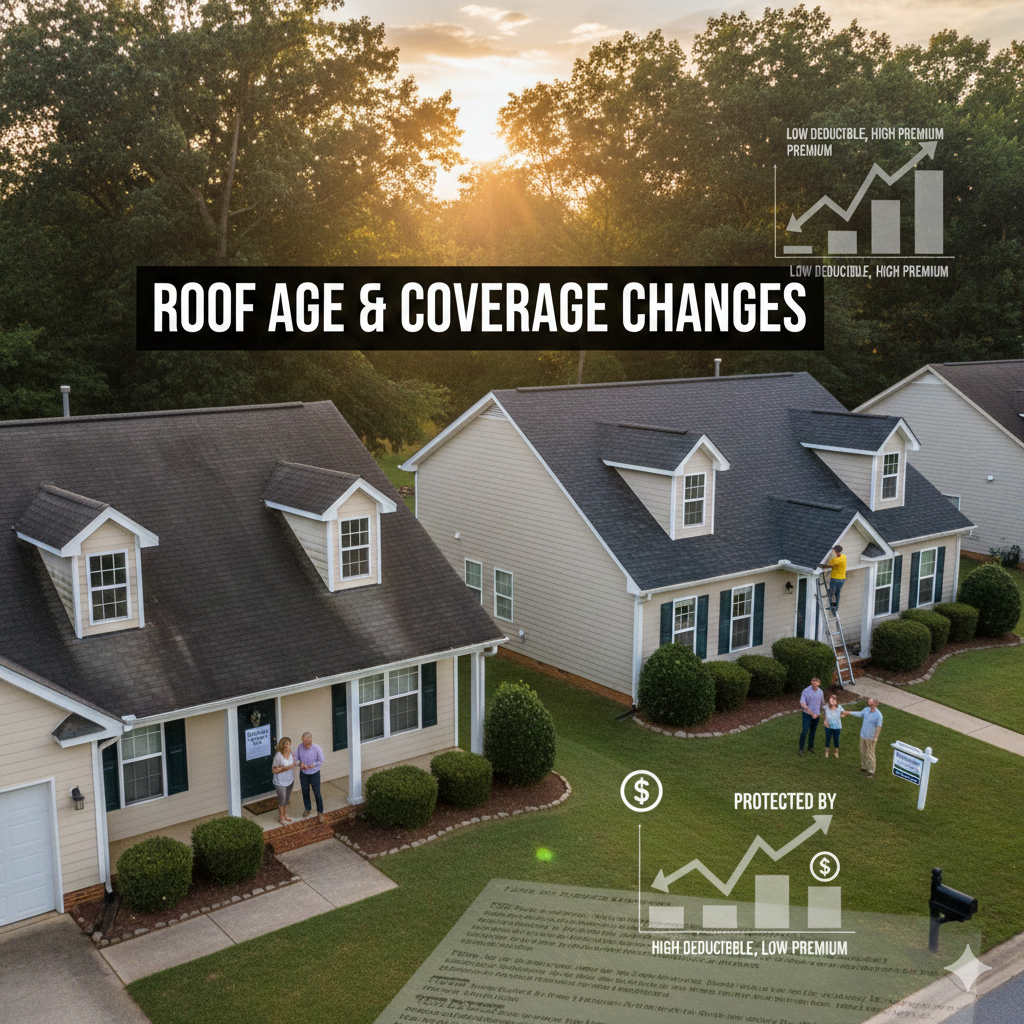
If you’ve taken a stroll through neighborhoods like Haymount or Hope Mills recently, you’ve likely noticed a common sight: roofing crews busy at work. In North Carolina, our homes are our sanctuary, but as we head into 2026, the “hat” on top of your house—the roof—is becoming a major focal point for insurance companies.
Whether you’ve lived in your home for decades or just moved in, understanding how your roof age and policy structure affect your protection is no longer just a “someday” task; it’s a “right now” priority. Let’s dive into how the evolving 2026 insurance landscape impacts your coverage and your wallet.
The “Age 15” Milestone: Why Your Roof is Getting More Scrutiny
In the past, as long as a roof wasn’t actively leaking, most of us didn’t give it much thought. However, for 2026, many insurance carriers in North Carolina are tightening their guidelines significantly. Once an asphalt shingle roof hits the 15-to-20-year mark, it often enters a “high-risk” category in the eyes of an underwriter.
Eligibility and Non-Renewal Risks
Insurers are increasingly using roof condition as a primary factor for policy renewals. We are seeing cases where carriers issue non-renewal notices for roofs older than 20 years, even if there has never been a claim filed. In 2026, some standard North Carolina guidelines specifically flag roofs with less than five years of remaining life expectancy as ineligible for preferred coverage.
Shift from Replacement Cost to Actual Cash Value
A critical change many homeowners overlook is the shift in how a claim is paid as a roof ages.
- Replacement Cost Value (RCV): This pays for a brand-new roof of like kind and quality, minus your deductible.
- Actual Cash Value (ACV): As a roof passes a certain age (often 15 years), some policies automatically switch to ACV. This means the insurer pays the depreciated value. If a 20-year-old roof is damaged, the payout might only cover a small fraction of the replacement cost, leaving you with a massive out-of-pocket bill.
The Deductible Dilemma: Balancing Monthly Savings with Long-Term Ris
Choosing a deductible—the amount you pay out of pocket before insurance kicks in—is one of the most effective ways to control your premium, but it requires a strategic approach.
Low vs. High Deductibles
- The Case for Low Deductibles ($500 – $1,000): This provides peace of mind if you don’t have large emergency savings. It makes sense for families who prefer a predictable out-of-pocket cost during a crisis.
- The Case for High Deductibles ($2,500+): Choosing a higher deductible can lead to significant monthly premium savings. This is often the best “long game” strategy for homeowners who view insurance as protection against major catastrophes rather than minor repairs.
The Danger of “Small Claims”
A major trap in 2026 is filing multiple small claims (like a $1,500 repair on a $1,000 deductible). Each claim stays on your insurance record for years. In a tightening market, three small claims in five years can lead to a non-renewal or make it nearly impossible to find a new carrier.
Neighborly Tip: We often recommend a higher deductible to discourage “nuisance claims” that could hurt your insurance eligibility later.
Beyond the Structure: Essential Endorsements You Might Be Missing
Standard policies handle fire and wind, but in North Carolina’s 2026 market, it’s the “extras” that often provide the most value.
Loss of Use & Personal Liability
These are the unsung heroes of your policy.
- Loss of Use (Coverage D): Imagine a kitchen fire makes your home unlivable for three months. This coverage pays for your hotel, the “extra” cost of eating out because you lack a kitchen, and even pet boarding. Without it, you’d be paying a mortgage and rent at the same time.
- Personal Liability: If a delivery driver trips on a loose stair on your porch and sues for medical bills, your liability coverage steps in to handle legal fees and settlements. In 2026, we recommend at least $300,000 to $500,000 in coverage to protect your growing assets.
The Water Backup Endorsement
Standard policies typically exclude damage caused by water backing up through sewers or drains. A “Water Backup Endorsement” is a small add-on that provides coverage if your sump pump fails during a summer storm or a sewer line clogs.
- Claim Example: A heavy rain overwhelms the local sewer system, sending six inches of water into your finished basement. Without this endorsement, the cleanup, new flooring, and damaged furniture would likely be a 100% out-of-pocket expense.
Start 2026 with a Clear View
Your home is likely your largest investment, and in 2026, the rules of the game are changing. Whether it’s the age of your roof or the fine print on your deductibles, being proactive is the best way to avoid expensive surprises.
A quick review of your policy doesn’t just save money—it ensures that when the next North Carolina storm rolls through, you have the protection you actually expect.
Would you like me to run a custom “Roof & Deductible Comparison” to see how your current policy stacks up against 2026’s new market rates?
Additional Resources
NC Deptartment of Insurance Home Insurance Resources
Insurance Information Institute – Home Insurance Savings Tips